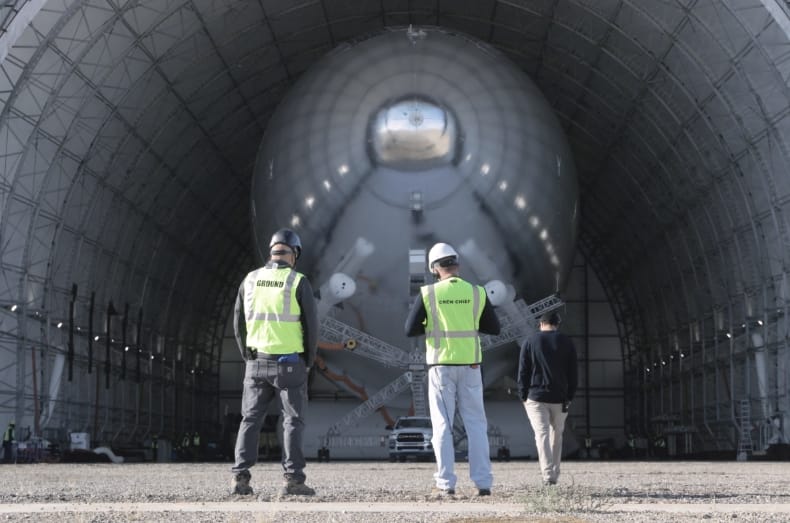
Sceye HAPS Specs Include: Endurance, Payload And Breakthroughs In Battery Technology
1. Specifications Let You Know What the Platform can actually do
There's a tendency in the HAPS industry to discuss goals rather than engineering. Press releases outline coverage areas, partnership agreements, and commercial timetables, but a more complex and more detailed discussion is about specifications, what exactly the vehicle is carrying and how long it remains on the road, as well as what energy systems make continuous operation feasible. To anyone who is trying to determine whether a platform that is stratospheric is really mission-capable or merely at the stage of proving prototypes, capacities for payloads, endurance estimates and battery efficiency are where the meat of the matter lives. It is easy to make vague commitments to "long endurance" and "significant payload" aren't difficult. Delivering both simultaneously, at an altitude of above is the technical challenge that separates legitimate announcements from bold statements.
2. A Lighter-than Air Architecture Changes the Payload Equation
The primary reason that Sceye's airship design can bear a significant load is that buoyancy can handle the fundamental task of keeping the vehicle airborne. This isn't an unimportant difference. Fixed-wing solar airplanes generate aerodynamic lift continually, which requires energy and puts structural constraints on the vehicle which restrict the amount of weight the vehicle can be able to carry. An airship that is floating in the stratosphere doesn't spend energy fighting gravity the same manner — that means that the energy generated from its solar array and also the structural capacity of the vehicle, can be devoted to the propulsion of the vehicle, station maintenance, and paying load operation. This creates an ability to payload that fixed-wing HAPS designs have the same endurance genuinely struggle to match.
3. Payload Capacity determinant mission scalability
The practical importance of higher payload capacities becomes apparent when you think about what the stratospheric tasks actually need. A payload for communications — antenna systems as well as signal processing hardware beamforming equipment — has significant weight and volume. So does a greenhouse gas monitoring suite. Also, a wildfire detection of earth observation. Running any one of these missions successfully requires hardware that has mass. Multiple missions at once requires more. Sceye's airship specifications are designed around the notion that a spacecraft should be capable of carrying a efficient combination of payloads, rather than forcing users to choose between observation or connectivity as the vehicle can't accommodate both simultaneously.
4. Endurance Is Where Stratospheric missions can win or lose
A platform that can reach high altitude for at least at least 48 hours before having to be lowered is a good option for demonstrations. The ability to hold a position over a period of months or weeks and is suitable for creating commercial services. The difference between these two outcomes is an energy based issue — specifically, if the vehicle is able to generate enough solar power in daylight hours to run all its equipment and recharge its batteries enough to provide full function through the night. Sceye endurance targets are built around this diurnal challenge taking the issue of energy efficiency during the night not as a stretch goal but as a basic necessity that all the other aspects of design is designed around.
5. The Lithium Sulfur Battery is a Real Step to a Change
The battery chemistry behind conventional consumer electronics and electric vehicles -mainly lithium-ion — has energy density characteristics that create real restrictions for high-end endurance applications. Every kilogram of mass that is carried in the air is a kilogram not available for payload, yet you'll need sufficient stored energy to keep an enormous platform running through a tense night. The chemistry behind lithium-sulfur changes this drastically. With energy densities approaching 425 Wh/kg, lithium-sulfur cells will store significantly more power per unit of mass than similar lithium ion cells. For a weight-constrained vehicle where every Gram of battery mass will have potential costs in payload capacity, this growth in energy density won't be incremental — it's architecturally significant.
6. Improvements in the efficiency of solar cells are the other half of the Energy Story
The energy density of the battery determines how much energy is stored. Solar cell efficiency is the measure of how quickly you can replenish it. Both are important and progress of one without advancement in the other leads to a less-than-perfect energy architecture. The advancements in high-efficiency photovoltaic cells that include multi-junction designs which capture a greater range of solar energy than conventional silicon cells – have substantially improved the energy harvest available to solar-powered HAPS vehicles in daylight hours. As well as lithium-sulfur storage these advances are what make an actual closed power loop feasible by generating and keeping sufficient energy each day to allow all systems to function indefinitely without the need for external energy.
7. Station Keeping Draws Constantly Out of the Energy Budget
It's tempting to think of endurance solely in terms of staying in a high place, but for an stratospheric platform, staying floating is only a tiny part of the energy equation. station keeping — actively keeping the position in front of stratospheric winds via continuous propulsion generates power constantly and is a substantial portion of energy usage. The budget for energy must support station keeping in conjunction with payload operation, avionics, thermal management, and communications systems at the same time. This is the reason why specifications with endurance numbers without describing the system that is operating during that endurance are difficult to measure. Truly accurate endurance estimates assume full operational load, and not a only minimally configured vehicle that coasts with payloads switched off.
8. The Diurnal Cycle Is the Constraint on Design that Everything else flows from
Stratospheric engineers focus on the diurnal cyclic — the rhythmic daily cycle of solar energy supply- as the central constraint around which platform architecture is based. During daylight the solar array needs to produce enough power to power every system, and then charge the batteries up to capacity. At night, the batteries must sustain all systems until sunrise without the platform losing its position, decreasing efficiency of the payload, or being in any kind of reduced-capability mode that could disrupt a continuous monitoring or connectivity mission. To design a system that threads this needle without fail, day after day, over a period of months is the primary engineering issue of solar-powered HAPS development. Every specification decision — solar array area in terms of battery chemistry and size, propulsion efficiency, and power draw of the payload -will feed into this key constraint.
9. It is the New Mexico Development Environment Suits This Kind of Engineering
Developing and testing a stratospheric airship requires infrastructure, airspace, and atmospheric conditions which aren't readily available everywhere. Skeye's home base is New Mexico provides high-altitude launch and recovery capabilities, clean blue skies suitable for conducting solar experiments, as well as access to the wide, uninterrupted airspace ongoing flight testing requires. There are many aerospace firms in New Mexico, Sceye occupies an unique position- that focuses on stratospheric lighter, than-air technology, rather than program for rocket launches that are usually found in the area. The rigor of engineering required to confirm endurance claims and battery performance under actual stratospheric conditions is precisely the kind of work that would benefit from a specially-designed test environment rather than random flight events elsewhere.
10. Specs That Hold Up Under Examination Are What Commercial Partners Have to have
In the end, the main reason that specifications matter beyond technical interest is that partners from the commercial sector making investment decisions must be aware that the numbers are accurate. SoftBank's commitment to a nationwide HAPS network for Japan as well as a pre-commercial network in 2026, is predicated upon the fact that Sceye's software can perform as specified in the operational environment — not just in controlled tests, but sustained for the duration of missions commercial networks need. Payload capacity which is robust by having a full telecoms and observation suites aboard and endurance data that is verified by actual operations in the stratosphere and battery performance that is demonstrated over real diurnal cycles are what turn a promising aerospace program into an infrastructure that a major telecoms operator is prepared to stake its plans for network expansion on. Have a look at the top rated sceye aerospace for blog tips including Beamforming in telecommunications, detecting climate disasters in real time, sceye softbank partnership, Monitor Oil Pollution, Beamforming in telecommunications, 5G backhaul solutions, solar cell efficiency advancements for haps or stratospheric aircraft, what are haps, whats haps, Sustainable aerospace innovation and more.
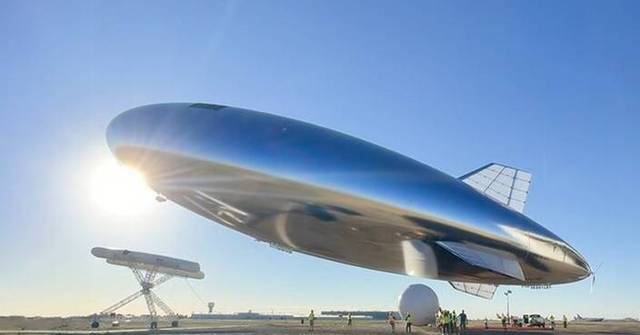
Sceye's Solar-Powered Airships Are Bringing 5g Service To Remote Regions
1. The Connectivity Gap Is a Infrastructure Economics problem first.
The estimated 2.6 billion people lack any internet access at all, and there is rarely it's due to a lack or technology. It's due to a lack in economic motivation to implement that technology in locations where population density is not enough or terrain is too challenging and stability of the country isn't stable enough to warrant a conventional return on infrastructure investment. Building mobile towers over mountainous archipelagos in deserted interior regions, or sparsely populated island chains costs real money against revenues projections that don't favor the idea. This is the reason why the disconnect in connectivity persists regardless of years of effort and genuine goodwill. The issue isn't just a lack of awareness, or a lack of intention or even the concept of terrestrial rollouts in areas that do not fit into the standard infrastructure model.
2. Solar-Powered Airships Change the Way We Deploy Economical
A stratospheric plane that serves as cell towers that is in the air alters the nature of the cost for connectivity to remote sites in ways that impact on a practical level. A single platform at 20 kilometres above sea level covers the ground and could require hundreds of terrestrial towers to reproduce, and without the engineering or land acquisition, the power infrastructure, and continuous maintenance that ground-based deployments need. The solar-powered platform removes the fuel logistics entirely — the platform generates its own electricity by absorbing sunlight, stores it in high-density batteries in order to be operational for the night, then it continues to operate without the need for supply chains that penetrate remote areas. For regions where the barrier connecting is the high cost and complexity associated with physical infrastructure, this is a genuinely new approach.
3. The 5G Compatibility question is More Important Than It Sounds
Broadband transmission from space is only beneficial commercially for a device people actually own. Satellite internet networks of the past required advanced terminals that were expensive massive, cumbersome, and unsuitable for widespread market adoption. The advancement of HIBS technology — High-Altitude, IMT Base Station standards — has changed this by making stratospheric systems compatible with the same 4G and 5G protocols that standard smartphones already use. A Sceye airship serving as a telecom antenna in the stratospheric region can, in general, function as a mobile device with out having any additional hardware installed on the end of the user. Its compatibility with current devices is what differentiates between a connectivity solution that is available to everyone in a range of coverage and one that is limited to those who can be able to pay for special equipment.
4. Beamforming transforms a large footprint into a Targeted and Effective Coverage
The area of coverage that is raw for an stratospheric system is vast However, the extent of coverage and useful capacity are different things. Broadcasting out a single signal across a footprint of 300 kilometers wastes most of the available spectrum to uninhabited terrains the open ocean, and other areas that have no active users. Beamforming technology enables the stratospheric broadband antenna to concentrate energy from the signal the areas where there is actual demand — a fishing community on one stretch of coastline or an agricultural region within another, or a small town which is undergoing a disaster a third. This sophisticated signal management enhances the efficiency of spectral refraction, which results in the capacity for actual users rather than the theoretical maximum area the system could illuminate in the event of broadcasting indiscriminately.
5G backhaul applications profit in the same waythe ability to direct high-capacity connectivity to the infrastructure nodes below that require them, rather than spreading capacity across the entire geography.
5. Sceye's Airship Design maximizes the payload This is available as Telecoms Hardware
The telecommunications components on an soaring platform — antenna arrays signal processing units beamforming equipment power management systems, and beamforming hardwareare of real weight and volume. Vehicles that use the majority of its energy and structural budget on airborne travel isn't able to provide useful telecoms equipment. Sceye's lighter-than-air design addresses this issue directly. Buoyancy drives the vehicle without ever having to pay for energy on lifting. That means the available power and structural capacity can allow for a telecoms device large enough to deliver commercially useful capacity rather than a sporadic signal over an enormous area. The airship's construction isn't an addition for the connectivity task -that's the reason why the carrying of a significant telecoms payload along with other mission equipment practical.
6. The Diurnal Cycle decides if the Service Is Continuous or Intermittent
A connectivity service that operates during daylight but shuts down at night is not the same as a connectivity service; it's a demonstration. In order for Sceye's solar-powered aircrafts to deliver the kind of continuous connectivity that remote communities and emergency responders as well as commercial operators rely on, the platform needs to deal with the overnight energy issue continuously and effectively. The diurnal cycle – generating enough solar energy in daylight hours to run all systems as well as charge batteries enough to sustain full operation until the next morning — is the most important engineering limitation. Innovations in lithium-sulfur battery energy density, reaching 425 Wh/kg, as well as improving solar cell efficiency in stratospheric aircrafts are what close this loop. Without these in place, endurance and consistency remain conceptual rather than operational.
7. Remote Connectivity can have a significant impact on social and Economic Effects
The reason for connecting remote regions doesn't have to be purely humanitarian in the sense of abstract. The internet allows for telemedicine that lowers the cost of healthcare delivery even in regions with no nearby hospitals. It allows distance learning that does not require the establishment of schools in every community. It enables financial services access which substitutes cash-dependent markets with the effectiveness through digital commerce. It enables early warning systems of the effects of natural catastrophes reach people most vulnerable to them. Each of these effects will intensify when communities are able to build digital literacy and their economy adapt to reliable connectivity. The massive internet rollout that began with coverage for remote regions doesn't mean that it's a luxury but rather delivering infrastructure that will have downstream effects on safety, health, education along with economic participation.
8. Japan's HAPS Network shows what National-Scale deployment looks like
The SoftBank deal with Sceye focused on the commercialization of HAPS Services in Japan in 2026 is significant in large part because of its size. A nation-wide network involves multiple platforms offering overlapping and continuous coverage throughout a country whose geography is comprised of thousands of islands with a mountainous interior, long coastlinesit is precisely the type of coverage problems that stratospheric communication is intended to overcome. Japan is also a highly developed technical and regulatory environment, where the operational challenges associated with managing stratospheric systems at a national scale are likely to be encountered and dealt with in a fashion that yields lessons for each subsequent deployment elsewhere. What works over Japan will determine what's working over Indonesia, to the Philippines, Canada, and all other countries with similar area and coverage plans.
9. The Founder's Perspective Determines How the Connectivity Mission Is Then Framed
Mikkel Vestergaard's guiding principle at Sceye regards connectivity not as something that's commercially produced and used to connect distant areas, but in the sense of infrastructure with a societal obligation that is attached to it. This premise determines which types of deployments the company will prioritize and the partnerships it pursues, and how it articulates what its platforms are for before regulators, investors and prospective operators. The focus on remote regions or communities in need of services, and high-resilient connectivity for disasters reflect the belief that the layer built should serve the people who are least benefited by existing infrastructure. It should not be seen as an idea of charity but as a primary design requirement. Sustainable aerospace innovation, as per Sceye's definition, involves building something that fills in the gaps rather than providing better service to populations already well-served.
10. The Stratospheric Connectivity Layer is Beginning To Look Like It's Almost Certain
For years, HAPS connectivity existed primarily as a concept that periodically brought in investment and provided demonstration flights, but not commercial services. The combination between maturing battery chemistry, improving performance of the solar cells HIBS normalisation that creates device compatibility and solid commercial partnerships has altered the direction of this technology. Sceye's solar airships symbolize an intersection of these technologies at a time where the demand side – remote connectivity, disaster resilience, five-G technology has never been better defined. The stratospheric zone between the orbital satellites and terrestrial networks isn't filling in slowly to the outer edges. It's getting designed with a specific cover targets, specific specifications, and precise commercial timelines tied to it. View the recommended sceye haps project status for more examples including what haps, Lighter-than-air systems, non-terrestrial infrastructure, what's the haps, what's the haps, sceye earth observation, marawid, Wildfire detection technology, softbank haps, sceye softbank partnership and more.